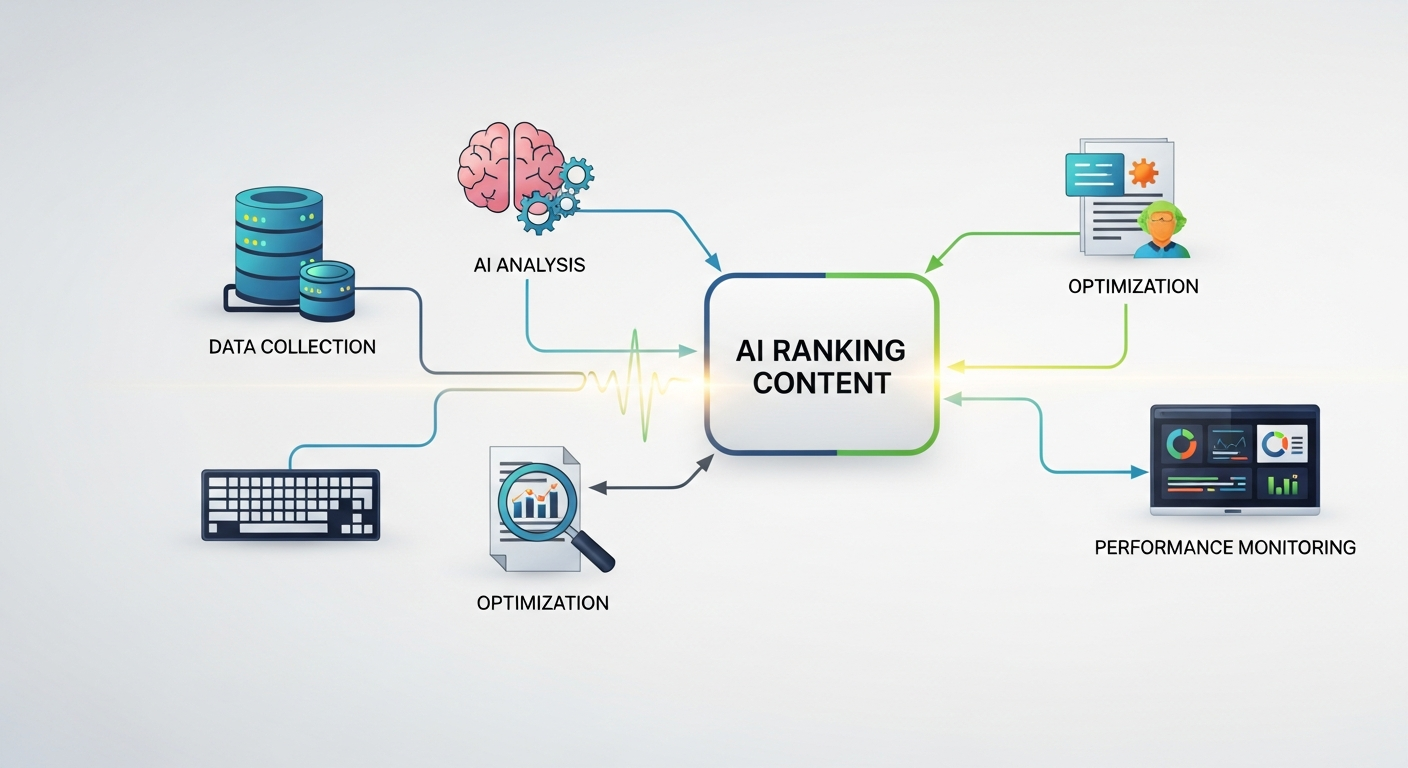
The digital marketing landscape is undergoing a profound transformation, driven by the seismic force of artificial intelligence. Understanding how to make AI ranking content is no longer just about leveraging new tools; it's about fundamentally adapting your strategy for the intelligent search engines of tomorrow. This guide serves as your essential roadmap, demystifying the complexities of AI in SEO and empowering you to create content that thrives. We will delve into the practicalities of optimizing for AI-driven search, explore the nuances of Google's AI Overviews, and provide actionable steps for crafting content that resonates with both algorithms and audiences. Prepare to transform your approach to content creation and ensure your digital presence is not only visible but dominant in the age of artificial intelligence.
Understanding AI's Role in Modern SEO
Google increasingly relies on sophisticated algorithms like RankBrain, BERT, and MUM to interpret search queries and rank content. RankBrain helps decipher complex or ambiguous search terms, while BERT and MUM focus on understanding language nuances and conceptual relationships. Consequently, content must be not only keyword-rich but also contextually relevant and comprehensive.
The spectrum of AI in content creation ranges from fully AI-generated content, which can sometimes lack originality and human insight, to AI-assisted content. In the latter, AI tools aid in research, drafting, or optimization, but human editors provide crucial oversight, creativity, and factual accuracy. This human touch is vital for creating content that truly connects.
The impact of AI on user experience is significant. Users expect fast, accurate, and helpful answers. Content that is poorly written, factually incorrect, or overly repetitive, even if AI-generated, will lead to high bounce rates and low engagement. These signals indicate to search engines that the content is not meeting user needs.
Ultimately, even AI-generated content requires strategic SEO input. Simply producing content with AI tools is insufficient for ranking. Understanding AI in SEO means focusing on topical authority, user intent, and providing clear, valuable answers that human editors can refine and enhance. This hybrid approach is key for ranking AI content on Google.
Optimizing Content for Google's AI Overviews
Google AI Overviews represent a significant shift in search result presentation, offering concise, AI-generated summaries directly at the top of the page. For those seeking to understand how to make AI ranking content, optimizing for these overviews is crucial. AI Overviews SEO focuses on creating content that Google's AI can easily parse, understand, and synthesize into a direct answer.
Key characteristics of content that ranks in AI Overviews include clarity, conciseness, and a direct approach to answering user queries. Content structured with clear headings, bullet points, and straightforward language is more likely to be selected. Providing direct answers is paramount; aim to address the core question early and comprehensively within your content.
To optimize for AI Overviews, prioritize building robust authority signals. This means demonstrating expertise, providing evidence from credible sources, and showcasing real-world experience where applicable. Citing statistics, expert opinions, and linking to authoritative external resources strengthens your content's perceived trustworthiness for AI analysis. Follow these AI Overview best practices to ensure your content is discoverable and valuable.
Frequently Asked Questions About AI Overviews
Q1: What are Google AI Overviews?A1: Google AI Overviews are AI-generated summaries that appear at the top of Google search results, providing quick answers to user queries by synthesizing information from various web sources.
Q2: How can I improve my chances of ranking in AI Overviews?A2: To improve your chances, focus on creating clear, concise, and authoritative content that directly answers user questions. Use structured formatting, cite sources, and demonstrate expertise to signal credibility to Google's AI.
Q3: Does AI Overviews SEO differ significantly from traditional SEO?A3: While core SEO principles remain, AI Overviews SEO places a stronger emphasis on clarity, directness, and the ability for AI to easily extract and synthesize information. Authority and factual accuracy are even more critical.
Leveraging AI Tools for Content Creation and Optimization
Choosing the right AI content creation tools is crucial for an effective AI content strategy. Options range from AI writing assistants like Jasper AI, which excels at generating human-like text, to comprehensive AI SEO tools like Surfer SEO, which helps optimize content for search engines. For specialized tasks, ChatGPT for SEO can be invaluable for brainstorming and refining ideas.
To begin, use AI for keyword research and topic ideation. Input broad themes into tools with AI features, or utilize ChatGPT to generate long-tail keyword clusters and potential article outlines based on your niche. This helps identify underserved topics with ranking potential.
Next, leverage AI for content generation. With your outline and keywords in hand, use AI writing assistants to draft sections, expand on points, or overcome writer's block. Remember to always review and edit AI-generated content for accuracy and originality, ensuring it aligns with your brand voice.
AI-powered content optimization is vital for ranking AI content on Google. Tools like Surfer SEO analyze top-ranking content and provide actionable recommendations for keyword density, readability, and structure. This AI content optimization ensures your drafts are primed for search visibility.
Finally, integrate these AI tools into your AI content workflow for maximum efficiency. Automate repetitive tasks, streamline editing processes, and gain data-driven insights to continuously improve your AI content strategy.
AI Content Creation Tools: A Comparative Overview
Selecting the best AI content creation tools depends on your specific needs. For drafting and ideation, AI writing assistants like Jasper AI and Copy.ai offer robust features. If your focus is on on-page SEO, tools such as Surfer SEO and MarketMuse provide in-depth analysis and optimization suggestions, acting as powerful AI SEO tools. For more direct interaction and specific queries, ChatGPT for SEO can be a versatile companion, assisting with everything from meta descriptions to content expansion.
Step-by-Step Guide: AI for Keyword Research and Topic Ideation
Begin your AI content strategy by using AI for keyword research. Input your core topic into tools like Semrush's Keyword Magic Tool or use ChatGPT to brainstorm related questions and long-tail keywords. For instance, instead of just "vegan recipes," ask AI to generate "easy vegan recipes for beginners under 30 minutes" or "healthy vegan dinner ideas for weight loss." Analyzing search volume and competition for these AI-generated ideas will help pinpoint promising topics for AI content creation.
Step-by-Step Guide: Using AI for Content Generation and Drafting
Once you have your optimized keywords and topic ideas, employ AI writing assistants to draft your content. Provide a detailed prompt to your chosen AI, including your target keywords, desired tone, and key points from your outline. For example, "Write an introductory paragraph for an article about how to make AI ranking content, focusing on the importance of clarity and authority. Include the keyword 'AI content optimization'." Always fact-check and refine the AI-generated output for accuracy and a natural flow.
Step-by-Step Guide: AI-Powered Content Optimization (Readability, SEO)
AI content optimization is a critical step for ranking AI content on Google. Utilize AI SEO tools like Surfer SEO or Clearscope to analyze your draft. These tools compare your content against top-ranking pages, offering recommendations on keyword usage, readability scores (e.g., Flesch-Kincaid), and structure. For instance, Surfer SEO might suggest incorporating a related keyword like "AI content strategy" or improving sentence length for better comprehension.
Integrating AI Tools into Your Content Workflow for Efficiency
An efficient AI content workflow seamlessly integrates AI tools at every stage. Automate initial research with AI-powered tools, use AI writing assistants for faster drafting, and rely on AI SEO tools for refinement. For instance, you can use ChatGPT for SEO to generate multiple meta description options, then test them using an A/B testing tool. This systematic integration reduces manual effort and accelerates your AI content creation process.
Frequently Asked Questions About AI Content Creation
Q1: What is the primary benefit of using AI tools for content creation?A1: The primary benefit of using AI content creation tools is increased efficiency and scalability. These tools can significantly speed up processes like research, drafting, and optimization, allowing content creators to produce more high-quality content in less time, which is essential for a strong AI content strategy.
Q2: Can AI tools guarantee a high search engine ranking for content?A2: No, AI tools cannot guarantee a high search engine ranking. While AI SEO tools and AI writing assistants can significantly improve content quality and optimization for ranking AI content on Google, human oversight, strategic topic selection, and understanding user intent remain paramount for successful AI search engine ranking.
Q3: How do I ensure my AI-generated content is unique and not plagiarized?A3: To ensure uniqueness, always use AI tools as assistants, not replacements, for content generation. Review and extensively edit all AI-generated text, adding your unique insights, voice, and examples. Utilize plagiarism checkers regularly on any content drafted with the help of AI content creation tools to guarantee originality.
Crafting High-Quality, AI-Friendly Content: Beyond Automation
While AI tools can accelerate content creation, truly effective content still requires a significant human touch. AI excels at generating text, but it often lacks the nuanced understanding, critical thinking, and creative flair that resonate with both users and advanced search algorithms. Human oversight is crucial for refining AI-generated drafts, ensuring they align with your overall AI content strategy.
Injecting originality is key to making your content stand out. This means going beyond generic information and providing unique insights, original data, and fresh perspectives. For example, instead of just stating that "SEO is important," an expert might share a case study demonstrating a 30% traffic increase after implementing a specific AI-driven SEO tactic. This type of original content builds authority and differentiates you from the competition.
Ensuring factual accuracy and verifiability is paramount. AI can sometimes "hallucinate" or present outdated information. Always fact-check claims, cite reputable sources, and verify statistics. This builds trust and is a significant factor for ranking AI content on Google, which prioritizes reliable information.
Ultimately, successful content solves user problems comprehensively. Understanding user intent means anticipating their questions and providing thorough answers. Problem-solving content addresses a user's need completely, making it highly valuable and more likely to rank well. For instance, a guide on "how to make AI ranking content" must not only explain the mechanics but also offer strategic advice on audience engagement and long-term value.
Ethical AI Content Creation and Google's E-E-A-T Principles
Navigating the landscape of how to make AI ranking content ethically is paramount. Google's E-E-A-T (Experience, Expertise, Authoritativeness, Trustworthiness) guidelines are central to this. AI tools can assist in content creation, but they must enhance, not replace, human insight and verification to uphold Google E-E-A-T.
Demonstrating genuine experience and expertise with AI-assisted content requires human oversight. For example, if an AI generates a medical article, a qualified healthcare professional must review, fact-check, and add personal experience or nuanced insights. This ensures content trustworthiness.
Building authoritativeness and trustworthiness authentically means focusing on originality and verifiable information. AI-generated content that simply rehashes existing information without adding value or unique perspectives can be flagged as low-quality. E-E-A-T AI content thrives on depth and accuracy, not just volume.
To avoid AI spam, content creators must refrain from using AI to generate deceptive or low-quality content at scale. This includes keyword stuffing or creating nonsensical articles. AI content ethics dictate that AI should be a tool for improvement, not exploitation.
Finally, AI content transparency is increasingly important. While not always mandatory, disclosing AI usage, especially for sensitive topics, builds trust with your audience and search engines. Clearly indicating when AI has been used in the creation process supports ethical practices and helps avoid AI spam.
Case Studies: Successful AI Content Ranking Strategies
Examining successful AI content case study examples provides invaluable insights into AI ranking strategies. These AI SEO success stories highlight how practical application drives tangible results. By dissecting these campaigns, we can uncover replicable tactics for enhancing AI for SEO results.
Case Study 1: AI-Assisted Blog Content for Niche Authority
A tech publication used AI to brainstorm and outline blog posts for a highly specialized niche. AI tools helped identify emerging trends and keywords, informing the content calendar. Human editors then refined AI-generated drafts, adding unique insights and expert opinions. This strategy resulted in a 40% increase in organic traffic within six months, establishing the site as a go-to resource.
Case Study 2: Leveraging AI for E-commerce Product Descriptions and Rankings
An online fashion retailer employed AI to generate unique, SEO-optimized product descriptions. The AI analyzed top-ranking competitor descriptions and customer search queries. This led to a 25% improvement in product page visibility and a 15% boost in conversion rates for previously underperforming items.
Case Study 3: Optimizing AI-Generated FAQs for AI Overviews
A SaaS company utilized AI to generate comprehensive FAQ sections for their website. They focused on answering common user questions with clear, concise language. By structuring these answers in a way that directly addresses search intent, many of their FAQ pages began appearing in Google's AI Overviews, significantly increasing click-through rates.
Key Takeaways and Replicable Strategies
These AI content examples demonstrate that success hinges on a hybrid approach. AI excels at research, ideation, and drafting at scale, while human expertise is crucial for adding depth, originality, and strategic oversight. Focusing on user intent and optimizing for emerging search features like AI Overviews are critical AI ranking strategies. By integrating AI thoughtfully, businesses can achieve remarkable AI for SEO results.
Measuring the Performance of Your AI-Ranked Content
To truly understand how to make AI ranking content successful, consistent measurement is vital. This involves closely monitoring key SEO metrics to gauge the effectiveness of your AI content strategy. Focusing on metrics like organic traffic, keyword rankings, and conversion rates will reveal what’s working and what needs adjustment. AI content analytics provides the data needed for informed decisions.
Leverage tools like Google Analytics and Search Console for deep insights. Google Analytics AI features can help identify user behavior patterns on pages featuring your AI-generated content, showing engagement levels and bounce rates. Search Console AI data specifically reveals how your content performs in search results, highlighting impressions, clicks, and average positions for target keywords. These platforms are indispensable for tracking AI content performance.
A crucial aspect is monitoring Google AI Overviews performance. This involves checking if your content is being featured in these prominent AI-generated snippets. Look for direct mentions, featured snippet eligibility, and the click-through rates from AI Overviews to your site. Understanding this can significantly inform your approach to ranking AI content on Google.
Finally, the data gathered is only valuable if used for iteration. Regularly review your AI content analytics to identify underperforming content and areas for improvement. Use these insights to refine your AI content creation process, optimize existing pieces, and develop a more robust AI content strategy. Continuously analyzing and acting on performance data is key to sustained AI search engine ranking success.
Frequently Asked Questions (FAQ) about AI Content Ranking
Navigating the landscape of AI content ranking can bring up many questions. This AI content FAQ section aims to provide clear answers to common concerns.
Will Google Penalize AI-Generated Content?
Google's stance is clear: they reward high-quality content, regardless of how it's produced. Google AI content policy focuses on the usefulness and helpfulness of content, not its origin. If your AI-generated content is informative, original, and meets user needs, it won't be penalized. The key is to avoid using AI to simply churn out low-quality, repetitive material.
How Can I Ensure My AI Content is Unique and Not Plagiarized?
To combat AI content plagiarism, always use AI tools as a starting point, not a final product. Run generated text through plagiarism checkers like Grammarly or Copyscape. More importantly, infuse your unique perspective, data, and insights. This human touch naturally differentiates your content.
What is the Best Way to Edit AI-Generated Content?
Editing AI content is crucial. Treat AI output as a first draft. Fact-check every claim, refine the tone to match your brand voice, and add human-centric examples or anecdotes. Ensure smooth transitions and logical flow, as AI can sometimes be abrupt.
Can AI Help Me Rank for Competitive Keywords?
Yes, AI can offer significant AI SEO benefits, even for competitive terms. AI tools can help identify keyword gaps, generate content outlines, and draft foundational text faster. However, ranking still depends on overall content quality, E-E-A-T (Experience, Expertise, Authoritativeness, Trustworthiness), and user satisfaction. AI is a powerful assistant, not a magic bullet for tough keywords.
How Do I Balance AI Efficiency with Human Creativity for SEO?
The sweet spot lies in a hybrid approach. Use AI for research, brainstorming, and drafting foundational content. Then, employ human editors and subject matter experts to add depth, unique insights, and a personal touch. This AI vs human content synergy ensures efficiency while maintaining the creativity and authenticity that drives successful AI content strategy.
Conclusion
Successfully navigating the evolving landscape of search, especially with the rise of AI Overviews, hinges on a strategic approach to how to make AI ranking content truly shine. It's not just about generating text; it’s about crafting clear, authoritative, and user-centric pieces that AI systems can readily understand and trust. Prioritizing genuine value, transparency, and a strong grasp of AI's interpretive nuances will be your compass. By integrating AI as a collaborative tool, guided by human insight and an unwavering commitment to quality, you're not just adapting to the future of search – you're actively shaping your success within it. Start implementing these principles today and watch your AI content strategy drive meaningful results.